September’s here 01/09/2009
Posted by chrisdshaw in Economics, FX.add a comment
The first day back after the summer break for European traders has heralded some interesting moves in the currency markets. With a notable gap opening up in opinion over prospects for global economic recovery direction in FX over the summer been sporadic,with most currencies trading in narrow, though volatile, ranges. Despite seemingly positive economic data from Asia, Europe and the US, the markets took on a distinctively negative tone towards the end of the day, with the USD gaining against all currency pairs, bar the JPY, in European afternoon trading. The AUD has been particularly hard hit, following the announcement by the RBA that rates would remain on hold for the foreseeable future; a disappointment to Aussie bulls who were expecting a more hawkish statement. Better than expected Chinese PMI figures helped boost equity markets in Asia and, initially, Europe, as did figures showing a drop in German unemployment. The first chink in the armour began with UK worse than expected manufacturing figures in the form of the PMI index, which reversed an early morning rally in Cable to 1.6377. The pair fell throughout the day to a low of 1.6111, before staging a late recovery. Despite yet more data from the US- ISM data showing the fastest 2 month growth in US manufacturing since 1983 and much better than expected July pending home sales growth- the market was spooked by increased concerns about the health of the banking sector and worries about the continued weakness of the American consumer. The USD benefitted from its safe haven status, with equity markets, bond yields and energy prices all suffering.
September is a nervous month for investors, with a reputation for being the worst monthly performer for the year. This year the nervousness is even greater as equity markets have ratcheted up ever more impressive gains over the summer and many economists- most notably those from Goldman Sachs and Morgan Stanley- are now talking about a world-wide V- shaped recovery. Other investors, and to be fair central bankers, are not so sure. In any case the first day of September has not disappointed in causing heart flutters.
FX Daily Update 19/08/2009
Posted by chrisdshaw in Uncategorized.add a comment
The European morning session has traded in a tight range as traders are waiting for further cues about the sustainability of the Asia-led economic recovery. Yesterday’s higher than expected UK CPI figures and European investor sentiment data alleviated the flight to safety earlier in the week. The most significant move in the FX markets this morning came from sterling, which dropped against the USD following Bank of England minutes showing that three MPC members, including Governor Mervyn King, had been voted down over proposing an even bigger boost to Quantitative Easing than was finally agreed. The overall tone of the minutes was also dovish, with the BoE stating that not enogh stimuli could lead to inflation remaining below the 2% target level. It said that although the overall level of risk had receded the depth of recession increased the likeliness of slack in the economy. The more dovish than expected sentiment from the MPC led to the GBP slipping below its 50 day moving average (1.6464) to retrace yesterday’s advance against the USD. However, the decline stalled at 1.6375, holding well above the weekly low of 1.6275. Sterling had started its decline from just under the 1.66 handle in anticipation of the release of the minutes.
In the Eurozone a lack of risk appetite in the European trading day led EURUSD to slip from a high of 1.4170 to the 1.4100 level, with German producer prices declining 7.8% versus and expected fall of 6.5%. This is the largest fall in prices in 60 years. EURUSD has remained above the 1.4092 50 day moving average- an imporant support level that, once breached, may lead to a more bearish move in the currency pair.
The USD, which has firmly reestablished its firm inverse relationship with risk sentiment, has been trading strongly on the back of a quiet but cautious trading day.
Will China save the world? 16/07/2009
Posted by chrisdshaw in Economics.add a comment
China’s GDP grew by an annualised 7.9% in Q2 if 2009, helped by a 4 trillion yuan ($585 billion) stimulus package that has boosted loan growth and urban fixed asset investment. The GDP figures slightly higher than market expectations and so there has been little market reaction. Chinese authorities have warned indicated that the loose monetary and fiscal conditions are likely to remain until there is more evidence of a sustainable recovery. BNP Paribas’s Hans Redeker is optimistic given that PPI data shows inflation remains a distant threat. However, he does not see China leading the rest of the world out of stagnation. The recovery of the US is still key.
Currency Update 14/07/2009
Posted by chrisdshaw in FX.add a comment
Most of the main G10 currency pairs traded in a narrow range today, despite plenty of potential market moving economic data and corporate earnings results. A bullish and, as it turns out, correct forecast of second quarter earnings for Goldman Sachs by Meredith Whitney on Monday helped equity markets rally. The British Pound and the Australian Dollar, currencies that are positively correlated to risk appetite rallied against the US Dollar on Monday. Today’s price action has been altogether more subdued.
In the US retail sales and PPI were, at first glance, better than expected. Retail sales rose 0.6% in June, although core sales rose by only 0.3%. Similarly, despite the producer price index rising to its strongest level since November 2007, the core index rose by less than one third of headline growth. The rise in oil prices by 10% in the last month has had a significant impact on both sets of results, providing a deceptive picture of the health of the US economy. By contrast the UK’s figures out today were altogether more upbeat. The RICS house price balance showed a reading of -18.1 in July compared with -43.8, the highest level since September 2007. Similarly, retail sales were better than expected, rising at an annualised rate of 3.2% compared with 0.8% in May. Cable hovered around the 1.6300 level. Sterling has benefitted in recent days from a return to risk appetite. The currency is vulnerable to corporate earnings news and global macroeconomic data. Given the amount of new information available to the market Cable has every chance of breaking out of the 1.6000- 1.6500 range.
The Eurozone fared worse yesterday, with the German and Euro ZEW investor confidence surveys showing a dip in expectations for the economy. Investor sentiment in Germany fell to 39.5 in July from an expected 48, while across Europe the ZEW fell below expectations to 39.5, from a previous reading of 44.2 in June. European industrial production data also underperformed, to 0.5%, lower than the expected 1.5% consensus expectation.
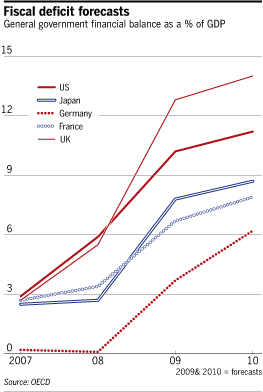
Fiscal Deficit projections 30/06/2009
Posted by chrisdshaw in Uncategorized.add a comment
The OECD maps out the fiscal future G7 countries face over the next 3 years, increasing the pressure on the UK government to map out cuts in public expenditure.
“A historic political week” 03/06/2009
Posted by chrisdshaw in Uncategorized.add a comment
FT’s Westminster blog- hardly the most sensationalist forum, captures the frenzied mood in the UK at the moment.
Australia stays out of recession 03/06/2009
Posted by chrisdshaw in Uncategorized.add a comment
The lucky country posts a better than expected first quarter GDP rise– mostly attributable to an increase in foreign trade. This follows a Q4 2008 GDP fall of 0.6%.
The End of Brown 03/06/2009
Posted by chrisdshaw in Politics.add a comment
Today’s Guardian editorial puts the boot in. Surely, it is now a question of when not if he resigns. With the botched revelation that Jacqui Smith is to go as well as a number of other junior ministers, White House concern over any change in Foreign Secretary so close to a general election, and open pleas by other minister to stay at their posts and a series of descriptions of backbench Labour MPs’ morale as being at ‘rock bottom’ tomorrow’s European election results could very well start the leadership ball rolling. Another year of a Brown premiership is surely inconceivable.
US Dollar sell-off continues 01/06/2009
Posted by chrisdshaw in FX.add a comment
Sterling has made spectacular advances against the USD today, rising from 1.62 to 1.64 in two hours, as positive manufacturing and house price data has firmed up positive sentiment towards the currency. Cable subsequently reached a high just below 1.65 by 19.30GMT. The move seems to have caught many market professionals off-guard, as sentiment was geared towards some type of correction of the recent dollar sell-off. Although the Sterling move was perhaps the most noteworthy move today given the UK’s relatively weak economic outlook- currencies from stronger economies, the AUD and NZD also made similar gains against the greenback, this is still a mostly USD weakness story. The USD index has had its biggest one month decline in 25 years- the year of the Plaza agreement. A significant breakdown in the US treasury yield-USD index is taking place, and with it many of the assumptions that have underpinned FX forecasting for the last few months. Following last week’s record breaking steeping of the US Treasury curve, coupled with a sell-off in the USD, focus is turning to the American economy’s long-term creditworthiness and inflationary risks associated with quantitative easing. The issue is, needlesstosay, red hot in China.
At the beginning of US Treasury Secretary Geithner’s meeting in China Tim Geithner said: “China is already too important to the global economy not to have a full seat at the international table.” He added: “The United States will fully support having China play a role in the principal cooperative arrangements that help shape the international system, a role that is commensurate with China’s importance in the global economy.” He also renewed the pledge that the administration would cut its fiscal deficits and promised “very disciplined” future spending, possibly including reintroduction of pay-as-you-go budget rules.
In a Q&A session in Beijing following his speech, he said: “We believe in a strong Dollar.” He added: “Chinese financial assets are very safe.” His response drew laughter from the audience; something with which the market would concur.
Redeker-Dollar faces tough ride until summer 27/05/2009
Posted by chrisdshaw in Economics, FX.add a comment
BNP’s Redeker warns about implications for dollar of rising long dated bond yields and demand for further QE measures in US. Also highlights the implications of deleveraging on the economy, which the equity market seems to be ignoring at the moment.
 Brave New World